


The future
has arrived
How artificial intelligence and robotics are revolutionizing the waste industry
Dr. Rückert is a professor of Cyber Physical Systems at the University of Leoben. He explains what matters with AI and what upheavals are coming our way.

Since 2021 Dr. Elmar Rückert has led the Cyber Physical Systems Department.
Opportunity: Dr. Rückert, everybody’s talking about AI. Where is it already in routine use?
Prof. Rückert: We all have smartphones and use them every day, and they include a lot of AI. Then there are chatbots, which people ask for advice more and more often. This trend is quite obvious in the university environment. Just a year ago AI was only a side issue, but now it’s used very frequently. The same goes for many companies. However, often there are misconceptions as to how AI really works and how it can be used to advantage.
“Every industrial revolution brings risks and opportunities.
Only those who can learn and adapt will benefit.”
– Prof. Elmar Rückert
Opportunity: If there was just one AI myth you could clear up, what would it be?
Prof. Rückert: People succumb to the illusion that they can solve everything with AI. Do I have a problem? A misdiagnosis? I’ll just ask AI. That sounds tempting but it doesn’t work like that in reality. You need experts and specialists who really understand AI and how to use it properly. And even then there are still limitations.

A four-legged robot being tested in a lab at the Technical University of Leoben.
Opportunity: Economics researchers are often saying that Austrian companies should use AI more. How can that succeed in a field this complicated?
Prof. Rückert: There are companies that use AI in a simple form, for example to make office processes more efficient with AI methods. But there is more than one way to go about this. For example, you can purchase software and make your way into the subject without much prior knowledge. Or you can hire experts who really have a deep understanding of AI. In my opinion the latter is important if companies want to analyse existing data with AI and draw conclusions from it. “Digital sovereignty” is a term you hear a lot in this context. Every company should think carefully about where it wants to be in future.
“Many companies want to use AI without really getting to grips with it.
But it doesn’t work that way.“
– Prof. Elmar Rückert
Opportunity: Speaking of “digital sovereignty”, what do we need to watch out for?
Prof. Rückert: When you sign a contract with an AI company you should be aware that often you’re giving them your own data in return. The alternative to this is building up your own expertise in-house and using your data yourself. We need to bear in mind that data is the gold of the future. But using it requires a deep under-standing of data, and specific questions for specific problems. Just gathering data is not enough on its own.

A robot arm recognizing and gripping various objects – an example of modern robotics.
Opportunity: What AI opportunities do you see for Komptech and the waste business?
Prof. Rückert: In your field AI has much to offer, for example making employees’ work safer and more efficient. Thus, during machine assembly and setup AR goggles can show which cables go where, and things like that. This is real AI, since the system has to interpret the camera image to analyse what connection it’s seeing and what the appropriate assembly method is. AI can also be used in the machines themselves, for example automated image processing to determine the grain size with high precision.

An experimental sorting system demonstrating automated detection and separating processes.

Professor Rückert controlling the sorting system.

Copper remains from a sorting test in the lab, collected for recycling.
Opportunity: Does artificial intelligence automatically improve machines?
Prof. Rückert: I would not put it like that. If I have one machine with AI and another without, what I have to look at is which one can be marketed best. Value for money is always important for the customer and if the balance isn’t right, AI won’t make the sale. The key point is that artificial intelligence can only be used effectively when the structures for it are in place and there is a solid understanding of the processes, both of the machine and the AI.
“In future AI robotics, alongside specialists versatile multi-purpose robots
can also play an important role.”
– Prof. Elmar Rückert
Opportunity: What other developments and changes can the waste industry expect in the area of AI-assisted machines and devices upcoming?
Prof. Rückert: KI is already in use in all sorts of machines, if still only to a limited degree and mostly in specialized applications, such as in sorting and cleaning robots. Coming generations might be more multipurpose. Robots might have arms, operate all kinds of devices and perform all kinds of tasks. They might be intelligent all-purpose devices that continuously assess their surroundings, evaluate data, make decisions and act autonomously. Yet recycling is still a fairly demanding process that requires a dexterity that robots lack. But what they cando is operate around the clock.

The borders between science fiction and reality can become increasingly porous if humanoid AI robots start taking on various tasks autonomously, alongside the specialist machines.
(AI in action: Image created with the help of ChatGPT)
Opportunity: Finally, we’d like to know what you personally look forward to when you look at the future of artificial intelligence?
Prof. Rückert: I’m looking forward to an exciting new world with many challenges, restraint in the critical use of AI, but new solutions for interaction with AI and robots that enrich our lives.

Dr. Elmar Rückert is professor of Cyber Physical Systems at the Technical University of Leoben.
The department sees itself as a link between artificial intelligence in theory and industrial applications in practice. One of its concentrations is machine learning, which among other things includes the process by which machines perceive their surroundings, process data in real time and make decisions based on the results.
This is the online version of the article “The Future has Arrived” from the Komptech magazine Opportunity / Issue No. 5 (2026)
Image rights: All images © Komptech GmbH where not otherwise indicated.
No liability accepted for changes or errors.
More news
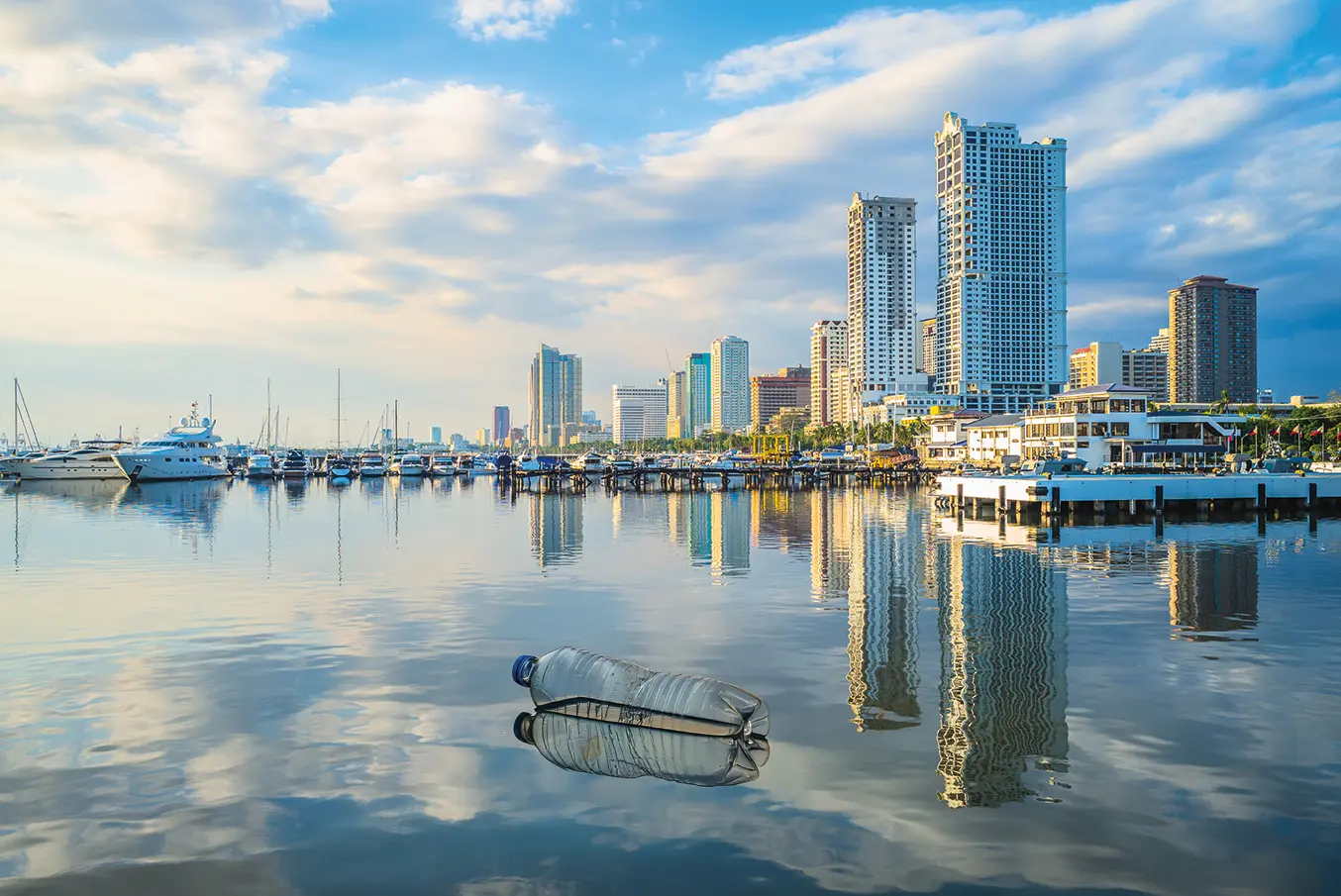
An island paradise battles a flood of garbage
The Philippines in the Pacific Ocean is a vacation paradise. But this up-and-coming island nation has a massive waste problem. FDR-IRRMI is one of those rising to meet the challenge – with the help of Komptech.

A Strong Collaboration That Has Lasted for Decades
The serial number 1 is found unusually frequently on Komptech machines at Munich’s Schernthaner GmbH. Why? Because Komptech and Schernthaner have a 30-year history of collaboration in operation,
communication and improvement.

Innovative Star Screen Technology for the US Market
Mulch production in the USA has been booming for years, and new recycling technologies for organic waste are in higher demand than ever. The new Komptech Multistar star screens help generate high-quality, homogeneous mulch from biomass.

A dependable partner in all weathers
Vienna’s Neustädter Stadtwerke und Kommunalservice GmbH (WNSKS) has collected waste for over 70 years, and now does so from 36 municipalities. They process it using several Komptech machines, from Topturn to Terminator.

Enabling Value Creation from All Types of Waste
Zeller Recycling GmbH offers all the services along the waste collection value chain – container service, transportation, reclamation and processing of waste.

A Year in Our New Headquarters – A Retrospective
It’s been about a year since most of the Komptech team moved to the new headquarters. Bernhard Muhr, Head of Group HR and member of Project Management for the construction of the new building, looks back on 12 eventful months.

