


Enabling Value Creation from All Types of Waste
Zeller Recycling GmbH in Mutterstadt, Germany offers all the services along the waste collection value chain – container service, transportation, reclamation and processing of waste. In doing so this medium-sized family-owned company makes a comprehensive contribution to sustainable waste management in the Rhine-Neckar metropolitan region.

The Zeller machine park is large for a company of its size. There are four stationary lines for the categories of commercial waste, waste wood, green cuttings and biomass. While several trucks wait to pass through the entry scale, the lines for commercial waste, waste wood and green cuttings are hard at work processing piles of material. They tirelessly shred, pre-sort, sort and separate. “The lines work 18 hours a day in two shifts, so that makes 4500 hours a year,” says owner Andreas Zeller. After the end of the second shift the machines are cleaned up, maintained and made ready for the following day.
What is today an all-in recycling service provider started – like so many others – as a container collector. The goal of its budding entrepreneur was to create value from all the materials he got from customers. As the tech-nology improved, he was able to do so ever better and with more differentiation.
At first he focused on waste wood and green cuttings. Seven years ago he decided to take on the challenge of commercial waste and added another stationary Komptech line, which has since been systematically upscaled and made more capable in the course of continued diversification. The goal was to make high-quality RDF in accordance with the Commercial Waste Ordinance. Today Zeller makes certified material for several kinds of combustion processes.
A SME succeeding at the big guys’ game
“Running a business means running, not resting,” is how Zeller describes his approach. “We had the waste right there, and decided it would be strategically and economically promising to offer in-depth service.” Anybody can pick up containers, unload them, turn them around and then truck the material directly to incineration. But only a few, usually large, companies have the capability to sort waste, separate out raw materials like metals and hard plastics, screen it into further fractions and then process it into defined categories for different kinds of incineration.
„Running a business means running, not resting.“
– Andreas Zeller
Zeller adheres rigorously to the Pareto principle: 80 percent of possible market areas are viable, 20 percent are uneconomical and therefore not his market. “We have a plant with high through-put that produces good quality for 80 percent of our distribution channels. But we don’t necessarily want to squeeze the last crumb of recyclables out of it.” What he does extract is wood, scrap metal and hard plastic. From the rest the company makes RDF fractions appropriate to different incineration processes. Hard plastic is a good example of Zeller’s 20:80 rule. It is pre-sorted out and window frames join sewage pipes in the PVC fraction. “But we don’t pick out the Playmobil figures. We work industrially and that means throughput,” says Zeller.

Zeller’s machines work 18 hours a day in two shifts, about 4500 hours a year.
Komptech’s ability to meet Zeller’s wishes and requirements is a major factor. As a mechanical engineer, he has a solid theoretical knowledge of machine design and over the years has built up extensive practical knowledge as well. Both pay off in his practical, economical plant layouts. “But none of that is of any use if I don’t have a supplier who can translate that into machines. At Komptech I have two regular contact people I can reach out to at any time. One of them always gets back to me right away,” he says. That’s why he buys Komptech, he adds, since the two contacts have taken all his requests into Komptech’s machine design during all his procurement processes. Responsiveness is another must. Zeller gets several tonnes of material per day. If a line goes down in the middle of the day, the issue needs to be resolved by the evening. That’s what they expect from their machine partner.

Zeller gets several tonnes of material per day.
The company works primarily with stationary machinery. The reasons are manifold, the most important one being that with stationary machines it is easier to comply with certain ordinances such as TA Luft (Clean Air Act), BVT (Best Available Technology) and AbAVwV (General Administrative Regulation for Waste Treatment Facilities). The second reason is simple, controllable processes. As far as Zeller is concerned, “There is no human error. There is only immature technology and processes.” So he defines all the steps and lays out systems to fit the process – never the other way around. The material is always dumped out at the same place and always fed in at the same place. The loader always drives from Point A to Point B. When the shift is over the cleaning crew begins. In the morning the operations manager checks the condition of the machinery and then it’s back to work. A third reason is the higher throughput Zeller gets with stationary machines. They can also be run in multi-shift operation, and the steady electric drives cause less wear and tear on the moving parts.

The Equalizor processes commercial, bulky, and household waste for recycling and thermal reclamation.

With its load-dependent stepless speed control the Terminator xtron adapts to the feedstock.
Zeller remains confident that his diversification strategy is sound, since providing the entire value chain keeps the company flexible. “We don’t turn away any category because we can’t make money with it. Instead we work with and invest in that category until we make money,” he says. The last 20 years have proven him right – today the company turns a profit on things it formerly did at a loss.
A relationship built on trust
After the sudden death of his father 24 years ago Andreas Zeller decided to keep the company going. He had just completed his mechanical engineering degree and had originally planned to start his career by gaining some professional experience. “But sometimes life forces you to grow up immediately. Then it’s good to have someone you can trust,” he says. His father had already been using Komptech and the son continued in his footsteps. Over the years his plans for the future of his family company grew and developed. He knows exactly what his machines need to be able to do and what technical support he needs. With Komptech he can share his ideas and get them implemented. “A lot of manufacturers can make good machines, but only a very few can provide a level of service that guarantees that their machines run and run and run. Komptech is one of them,” he says.
„At Komptech I have two regular contact people I can reach out to at any time. One of them always gets back to me right away.“
– Andreas Zeller
Today Andreas Zeller is running his family company with the same determination as when he first took responsibility for it, with a clear vision and uncompromising quality. What drives him is not just technology, but dependability. And that’s where the strength of his long relationship with Komptech lies: Machines that perform. Service that keeps them that way. And the good feeling of being able to rely on each other, today and in the future.
About Zeller Recycling GmbH:
Location:
Mutterstadt, Germany
Company size:
Approx. 49,000,000 € revenue
Approx. 200 employees
Komptech machines:
Equalizor 8010
Terminator 6200 direct SL
Terminator xtron
Several Crambos (mobile and stationary)
Several star screens (mobile and stationary)
Several drum screens (stationary)
This is the online version of the article “Enabling Value Creation from All Types of Waste” from the Komptech magazine Opportunity / Issue No. 5 (2026)
Image rights: All images © Komptech GmbH / Offenblende where not otherwise indicated.
No liability accepted for changes or errors.
More news
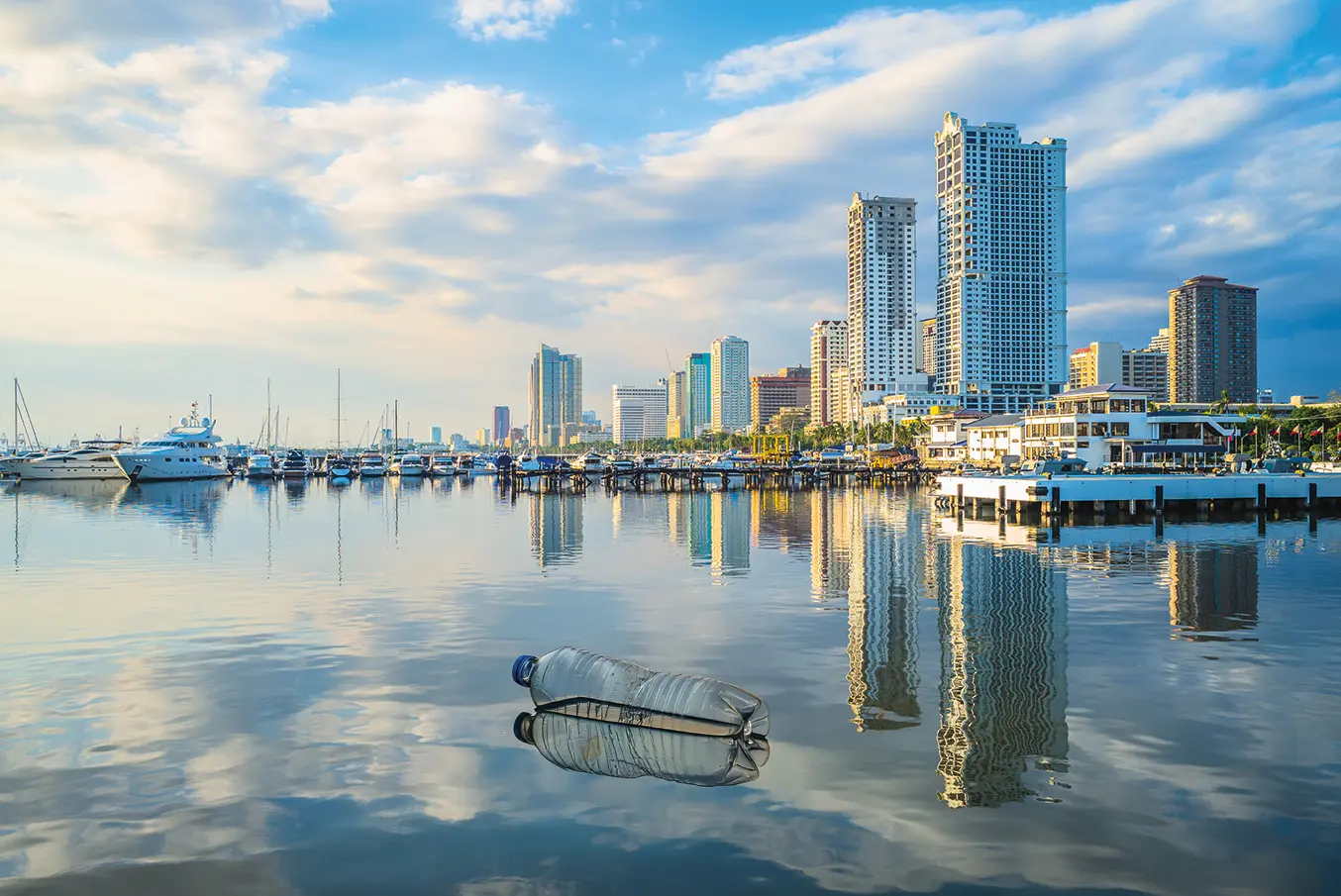
An island paradise battles a flood of garbage
The Philippines in the Pacific Ocean is a vacation paradise. But this up-and-coming island nation has a massive waste problem. FDR-IRRMI is one of those rising to meet the challenge – with the help of Komptech.

A Strong Collaboration That Has Lasted for Decades
The serial number 1 is found unusually frequently on Komptech machines at Munich’s Schernthaner GmbH. Why? Because Komptech and Schernthaner have a 30-year history of collaboration in operation,
communication and improvement.

Innovative Star Screen Technology for the US Market
Mulch production in the USA has been booming for years, and new recycling technologies for organic waste are in higher demand than ever. The new Komptech Multistar star screens help generate high-quality, homogeneous mulch from biomass.

A dependable partner in all weathers
Vienna’s Neustädter Stadtwerke und Kommunalservice GmbH (WNSKS) has collected waste for over 70 years, and now does so from 36 municipalities. They process it using several Komptech machines, from Topturn to Terminator.

A Year in Our New Headquarters – A Retrospective
It’s been about a year since most of the Komptech team moved to the new headquarters. Bernhard Muhr, Head of Group HR and member of Project Management for the construction of the new building, looks back on 12 eventful months.

Dr. Rückert is a professor of Cyber Physical Systems at the University of Leoben. He explains what matters with AI and robotics and what upheavals are coming our way.

