


A Strong Collaboration That Has Lasted for Decades
The serial number 1 is found unusually frequently on Komptech machines at Munich’s Schernthaner GmbH. Why? Because Komptech and Schernthaner have a 30-year history of collaboration in operation, communication and improvement.

Image: Very satisfied with the new Nemus 3000: Markus Heinzelmayr (r.) of Schernthaner GmbH and Sebastian Berghaus (l.) of Komptech.
Agriculture, earthworks, disposal, composting: Schernthaner GmbH in Munich provides a wide range of services. Since the 1960s this family company – now in its 3rd generation – has handled the planning, design and execution of large-scale landscaping projects, as well as tree surgery and composting, and also offers a large rental machine park. Recycling specialist Komptech has been on board from the start and several of its machines are in use there. What’s remarkable is that many of the Komptech machines at Schernthaner bear the serial number 1. These two pioneering companies are in a mutually beneficial symbiosis, as CEO Sigmund Schernthaner relates: “Many Komptech designs proved themselves at our facility first before going into series production.” In other words, the prototypes were tested in actual use at Schernthaner, and Schernthaner’s suggestions for improvement were incorporated into the final versions. “Komptech can test their machines here at high volumes, while we always get the machines we need. This is a very trusting partnership and not just a matter of exchanging products for money,” says Schernthaner.
„When we have an improvement suggestion or need a special solution, we call Komptech.“
– Sigmund Schernthaner –
CEO of Schernthaner GmbH
It’s a win-win, and has been for 30-odd years. Back then Josef Schernthaner Senior and Komptech founder Josef Heissenberger signed a purchase contract for the first Komptech machine. Now the Schernthaner machine park boasts eight Komptech machines: Crambo 6000 and Axtor 4510 shredders, a Topturn X53 compost turner, a Hurrifex wind sifter, a Nemus 2700 and the new Nemus 3000 drum screen, and Multistar XXXL and XXXL3 star screens.
The new Nemus 3000
Their latest acquisition – likewise proudly bearing serial number 1 – is the new Nemus 3000. For over half a year this drum screen has been helping the team around CEOs Sigmund and Josef III Schernthaner with their windrow composting operations. The results have been positive. Operations manager Alexander Holzapfel especially appreciates the new central positioning of the screen drum in the chassis: “It prevents accumulation of material on the inside walls of the production chamber, so that fewer cleaning breaks are needed.” He adds that now the screen drums can be changed considerably faster. He’s also enthusiastic about the fast deployment of the supports and conveyors. “The reduced cleaning effort, improved user-friendliness and faster setup give the Nemus 3000 overall higher performance than its predecessor.” And he thinks that with these improvements the machine will also turn out to last longer. “We run it about 38 hours a week, 44 weeks a year. With this runtime we have had to replace our drum screen machines every five years. But we think this might not be necessary now, with the design changes. We’ll be interested to see!”
„The new Nemus 3000 stands out with quick setup, high user-friendliness and low cleaning effort.“
– Alexander Holzapfel –
Operations manager at Schernthaner GmbH

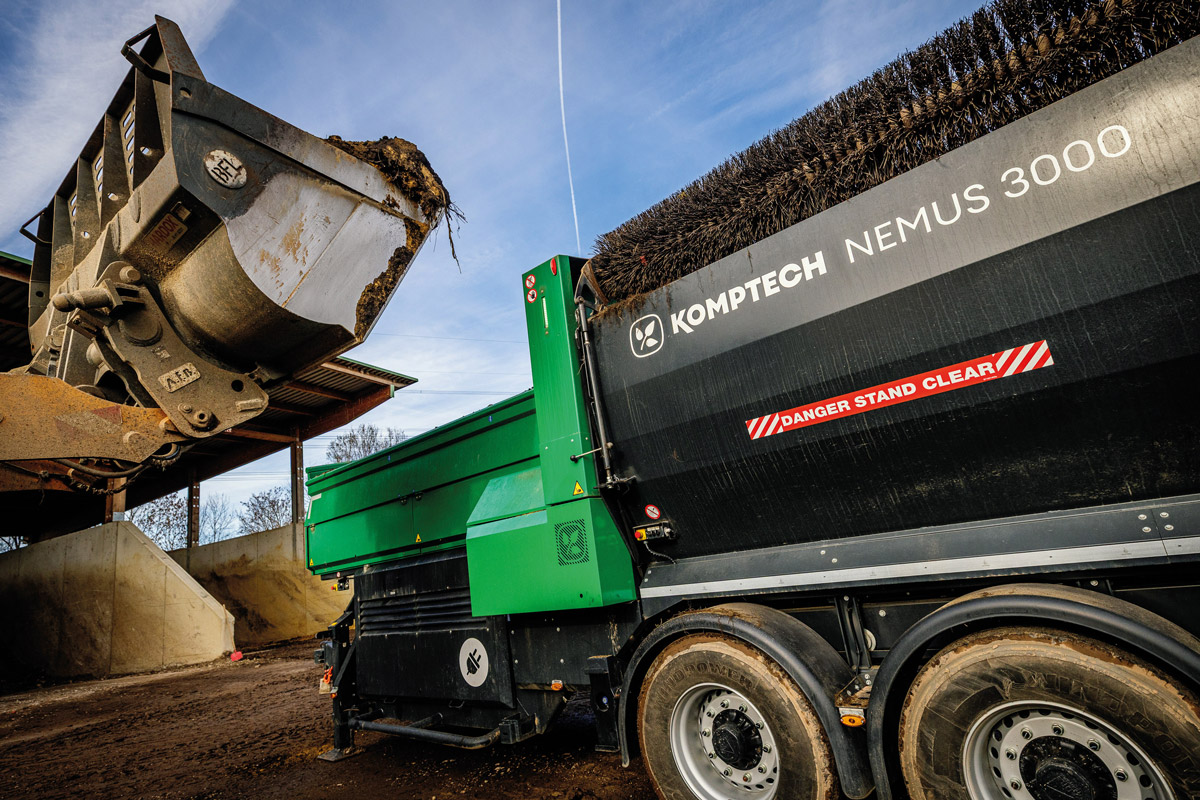
Image: A large hopper with straight-run control, 30 square metres of screening area, an efficient cleaning brush and long discharge conveyors – the Nemus offers a very convincing set of features.

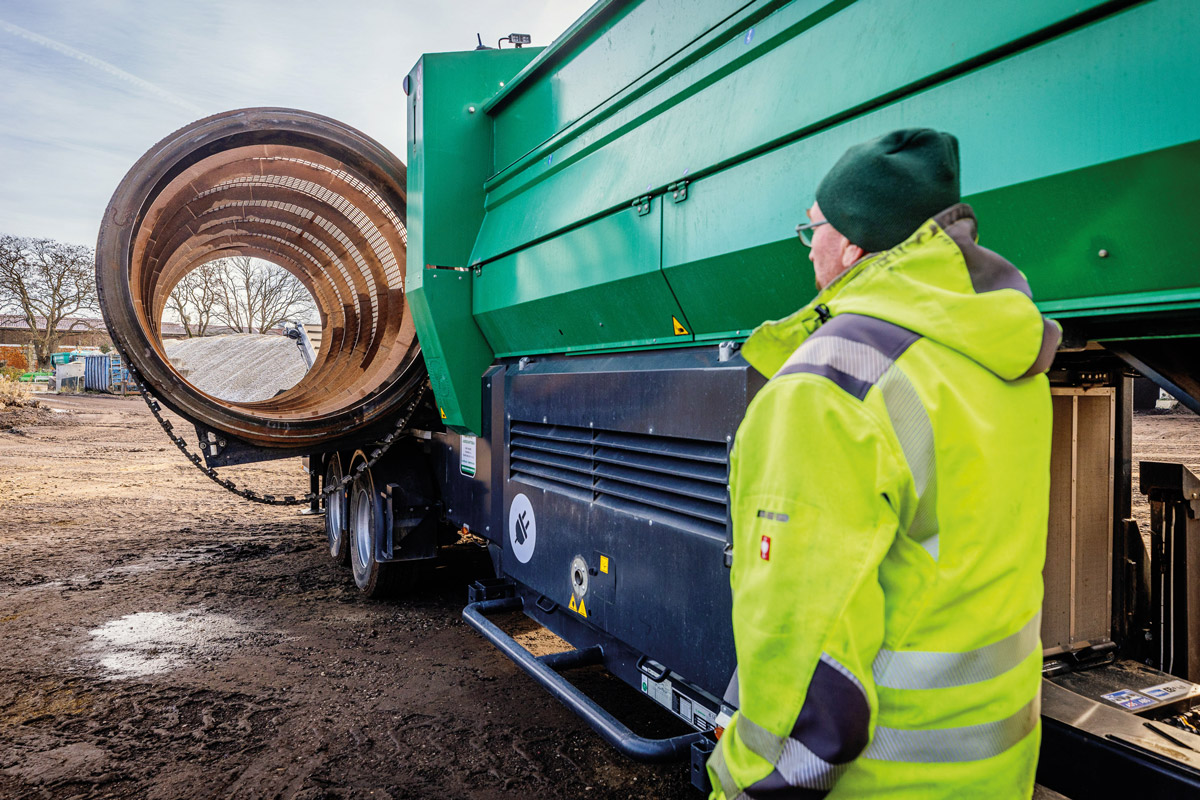
Image: The plug symbol reveals that the new Nemus 3000 can be run on power from the built-in diesel generator as well as from the grid.

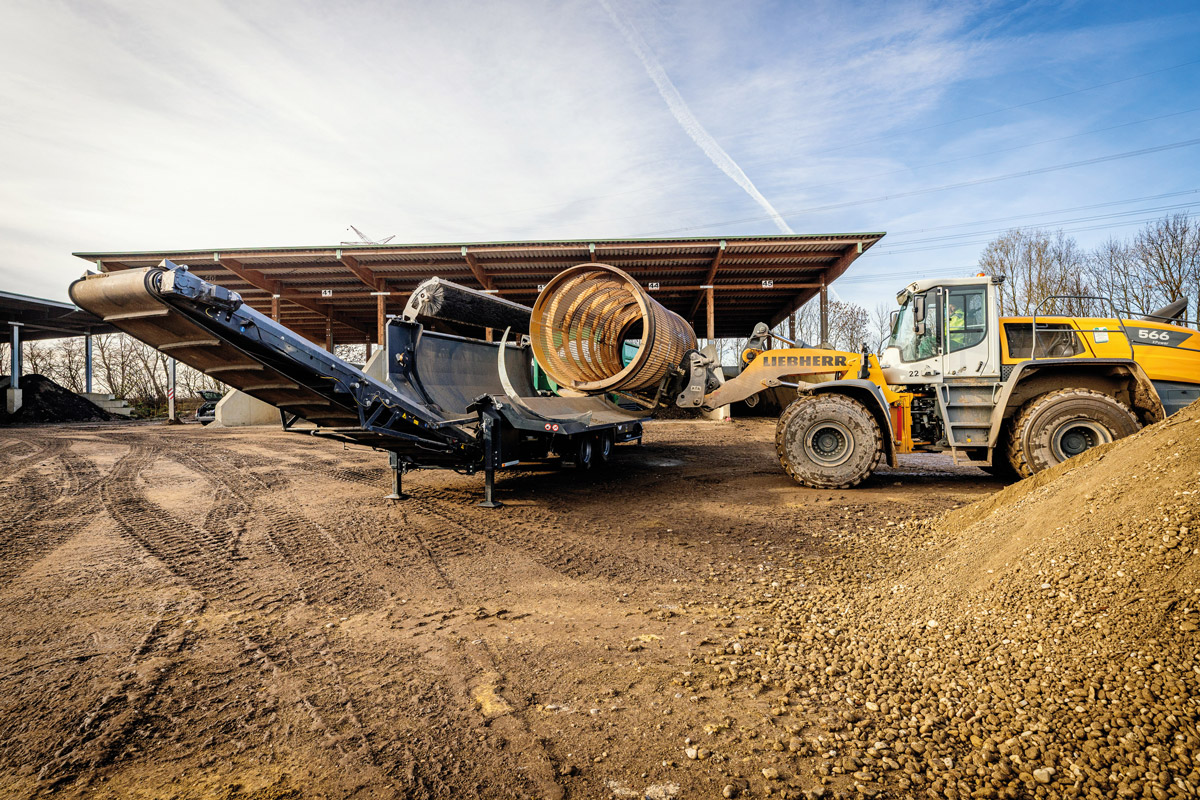
Image: Screening compost or processing minerals – the Nemus is at home anywhere.
Adapted to all wishes
The star screens as well as the drum screen do good service at the site, notes Alexander Holzapfel. “The star screens are ideal for screening compost, while the tough drum screens are a great fit for earthworks to sift through heavy material.” Schernthaner generally makes compost with a 10 mm grain, while for earthworks grains range from 15 to 60 mm depending on whether the product is intended as substrate for tree pits, humus, turf or sport fields. The company also produces ready-to-use flower and plant soil under the name Biotana. Taking all these requirements into account, during development the Nemus 3000 was adapted to the company’s wishes, as Holzapfel says: “The Nemus 3000 was designed by Komptech technicians to address the wishes and suggestions from the customer side, and with the sum of its detail improvements it is a very attractive product.” Sigmund Schernthaner confirms it: “When we have an improvement suggestion or need a special solution, we call Komptech.” Komptech always has an open ear for customers’ requests for improvement – because even the most imposing machine is worthless if it meets the requirements only in theory, but not in practice.
Continuous improvement
This practical focus reflects Komptech’s DNA through and through. Michael Seidel, Sales Manager at Komptech for the Munich region, explains: “In mechanical engineering real improvement only happens when design meets practice.” And in fact, one of Komptech’s catchphrases is “Continuous improvement” – ideally not just on paper, but live, on-site and in operation.
For this purpose, customer data is constantly captured and analysed, naturally under strict data security. “These analyses give us valuable feedback so that we can improve the quality, efficiency and sustainability of our machines for the benefit of the customer and thus their competitive advantage,” explains Seidel. This is the kind of competitive advantage that Schernthaner has profited from for three decades.
„Schernthaner and Komptech are linked by a trusting collaboration marked by affirming and constructive dialogue.“
– Michael Seidel –
Sales Manager at Komptech

Image: Cleanly separated – the screening result stands up to close inspection.
This is the online version of the article „A Strong Collaboration That Has Lasted for Decades” from the Komptech magazine Opportunity / Issue No. 5 (2026)
Image rights: All images © Komptech GmbH & Offenblende where not otherwise indicated.
No liability accepted for changes or errors.
More news
Turning the Tide on Waste in an Island Paradise
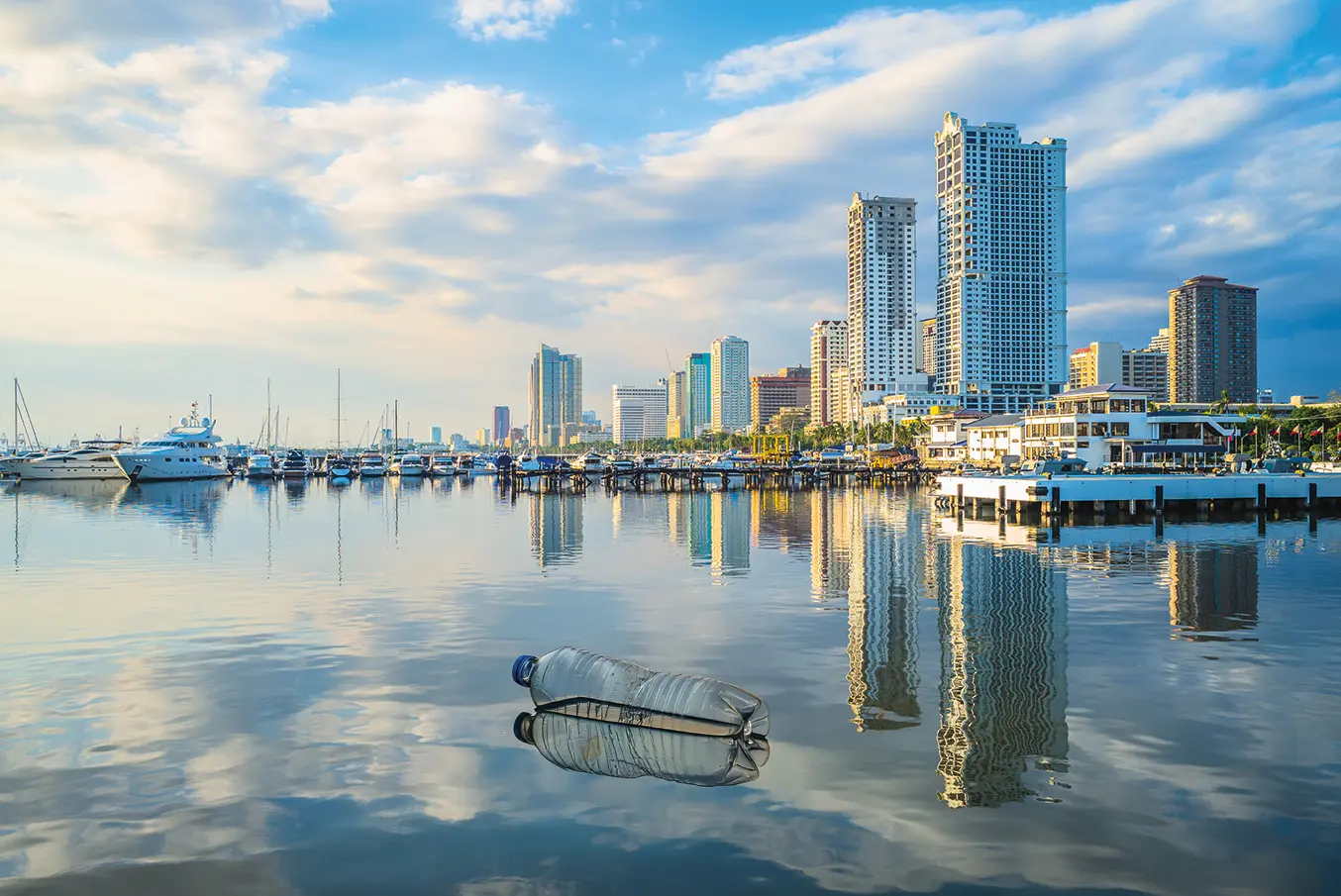
The Philippines in the Pacific Ocean is a vacation paradise. But this up-and-coming island nation has a massive waste problem. FDR-IRRMI is one of those rising to meet the challenge – with support from Komptech.

Innovative Star Screen Technology for the US Market
Mulch production in the USA has been booming for years, and new recycling technologies for organic waste are in higher demand than ever. The new Komptech Multistar star screens help generate high-quality, homogeneous mulch from biomass.

A Dependable Partner in All Weathers
Vienna’s Neustädter Stadtwerke und Kommunalservice GmbH (WNSKS) has collected waste for over 70 years, and now does so from 36 municipalities. They process it using several Komptech machines, from Topturn to Terminator.

Enabling Value Creation from All Types of Waste
Zeller Recycling GmbH offers all the services along the waste collection value chain – container service, transportation, reclamation and processing of waste.

A Year in Our New Headquarters – A Retrospective
It’s been about a year since most of the Komptech team moved to the new headquarters. Bernhard Muhr, Head of Group HR and member of Project Management for the construction of the new building, looks back on 12 eventful months.

Dr. Rückert is a professor of Cyber Physical Systems at the University of Leoben. He explains what matters with AI and robotics and what upheavals are coming our way.

