


Recycling in South Korea: A look behind the scenes
On Systematic recycling: Wolfgang Köstinger of the Austrian Economic Chamber Seoul on technology partnerships and the South Korean sense of order.

Image: South Korea is one of the leading high-tech nations, exporting the latest technologies around the globe – but for recycling, they look to “Made in Austria”.
Image rights: jakartatravel – stock.adobe.com
In South Korea people do not thoughtlessly toss PET bottles into residual waste. They take trash separation seriously here – not just with clever systems, but also with watchful cameras. “Sometimes you feel like Big Brother is watching you, but it works,” says Wolfgang Köstinger with a smile. As Director of the Austrian Economic Chamber in Seoul, he has been here for many years and knows the country and its people well – and he knows how deeply order and environmental awareness are anchored in society. Trash is cleanly separated in Seoul, in private households and in the bins of big apartment buildings. On the streets, bins and sacks colour-coded for content await pickup by municipal waste disposal.

Image: South Korea has set itself the ambitious goal of becoming climate-neutral by 2050.
Image rights: efired – stock.adobe.com
HIGH TECH MEETS ENVIRONMENTAL TECH
South Korea is one of the world’s most innovative industrial economies. But when it comes to environmental technology, they look to Austria. “Austrian firms like Komptech and Binder & Co enjoy a stellar reputation in recycling and waste management,” says Köstinger. That’s one reason South Korean partner SJ Korea is an old acquaintance. As the representative of several showcase Austrian companies, the company is not just a sales partner, but also a plant operator in its own right.
A current example is the new refuse-derived fuel production plant in Seosan. The facility was opened in a ceremony attended by some 200 guests, and accompanied by traditional percussion and flower wreaths. “A party like they celebrate only in Korea,” says Köstinger. Komptech made a key contribution to the plant with its machines.


Image: Tradition meets modern – plant opening ceremony in Seosan.
RECYCLING TO MEASURE
The new plant processes commercial waste from a nearby industrial zone. It reduces materials to a grain of two centimetres – a record in Korea. This is used to make RDF for incineration to produce energy. “District heating is very important in the cold Korean winter; 20° below is not uncommon in Seoul,” reports Köstinger.
CIRCULAR ECONOMY IN KOREAN
South Korea has set itself ambitious goals, with CO₂-neutrality by 2050 as a government target. The country is investing heavily in hydrogen technology and electromobility. “There are already around 200 hydrogen filling stations in the country,” notes Köstinger. The country is also working on changing habits, using its high social pressure to conform. People separate not just from conviction, but also because “everybody does it.” And those who don’t do it risk social disapproval, or even a “bad” picture from a monitoring camera.

Image: Waste containers combine smart technology with futuristic design.
Image rights: HYANG – stock.adobe.com
BETWEEN SEOUL AND STYRIA
What makes Austrian environmental technology so attractive for South Korea? According to Köstinger it is “quality, dependability and decades of experience.” The fact that a hightech country like South Korea chooses Austrian recycling equipment is a strong signal, and an opportunity for even more cooperation.
Partnership with SJ Korea – together for a green future
Our success story with SJ Korea started in May 2015 with a visit to our headquarters in Frohnleiten, Austria. Mr. Park, CEO and owner of SJ Korea, recognized early on the importance of professional waste management in his home country. Even more importantly, he shared our vision of supplying not just machines but complete system solutions, tailored to the needs of his customers.
What followed was more than just a business relationship. It was a partnership based on innovative spirit, quality consciousness and true commitment. Together we made Komptech strong in Korea and played a key role in the development of modern, future-oriented waste management.
Today, almost 150 Komptech machines are at work throughout the country, day by day contributing to making South Korea a little bit greener.
Innovative technology for the circular economy
The transformation to a sustainable circular economy has high priority here, including legislatively. The Korean Environment Ministry is working intensively on new requirements to expand plastics recycling and push the transition from conventional mechanical to futuristic chemical recycling.
The new recycling plant in Seosan in the west of the country is an impressive example of this transition. The plant is already prepared for the challenges of the next generation. Depending on the feedstock, it can produce refuse-derived fuel for energy reclamation, or in future high-quality raw material fractions for making new plastics. The heart of this capability is the clever interaction of the latest coarse, medium and fine shredding technology, as well as highly efficient screening and separating processes for maximum reclamation of the recyclables in the feedstock.

Image: Despite digitalization, an analogue model of the plant also arouses interest.

Image: Just before starting up, an impressive array of shredders, screeners
and separators awaits Korean waste.

Image: The new Equalizor medium-speed shredder is one of the core components
for making refuse-derived fuel.
The plant design is based on solid knowledge and proven technology Made in Austria. Komptech supplied high-performance Terminator and Equalizor shredders, as well as stationary drum screens and several Ballistor ballistic separators. The plant is also outfitted with Binder & Co flip-flow screens, whose multiple Bivitec units ensure precise fines separation.
Komptech’s distribution partner SJ Korea has overall responsibility for this innovative recycling solution. With its commitment, the company makes an important contribution to implementing South Korea’s ambitious goals towards becoming a sustainable society with a functional circular economy.
This is the online version of the article “Recycling in South Korea: A look behind the scenes” from the Komptech magazine Opportunity / Issue No. 4 (2025) ↗
Image rights: All images © Komptech GmbH where not otherwise indicated.
No liability accepted for changes or errors.
More news
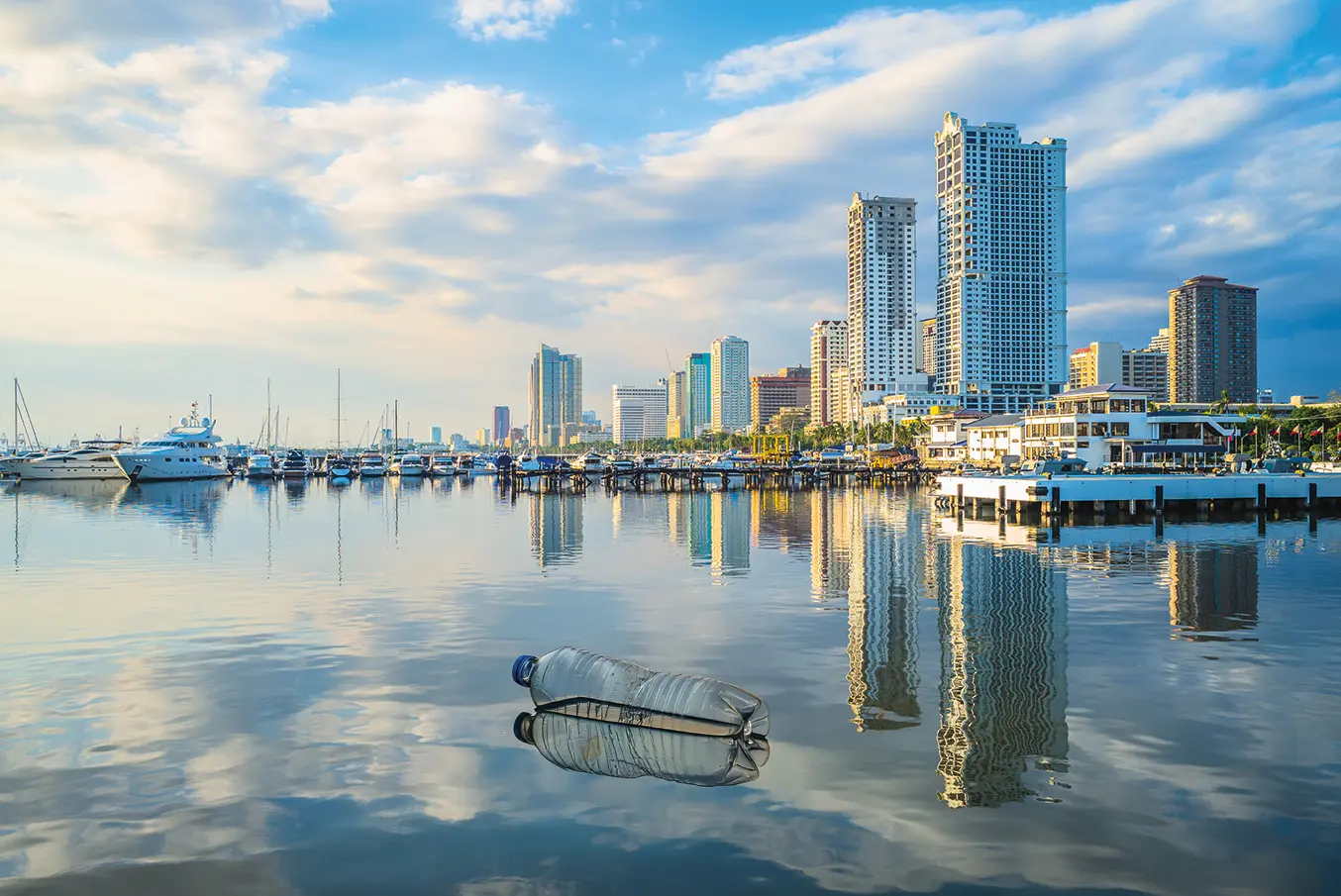
An island paradise battles a flood of garbage
The Philippines in the Pacific Ocean is a vacation paradise. But this up-and-coming island nation has a massive waste problem. FDR-IRRMI is one of those rising to meet the challenge – with the help of Komptech.

A Strong Collaboration That Has Lasted for Decades
The serial number 1 is found unusually frequently on Komptech machines at Munich’s Schernthaner GmbH. Why? Because Komptech and Schernthaner have a 30-year history of collaboration in operation,
communication and improvement.

Innovative Star Screen Technology for the US Market
Mulch production in the USA has been booming for years, and new recycling technologies for organic waste are in higher demand than ever. The new Komptech Multistar star screens help generate high-quality, homogeneous mulch from biomass.

A dependable partner in all weathers
Vienna’s Neustädter Stadtwerke und Kommunalservice GmbH (WNSKS) has collected waste for over 70 years, and now does so from 36 municipalities. They process it using several Komptech machines, from Topturn to Terminator.

Enabling Value Creation from All Types of Waste
Zeller Recycling GmbH offers all the services along the waste collection value chain – container service, transportation, reclamation and processing of waste.

A Year in Our New Headquarters – A Retrospective
It’s been about a year since most of the Komptech team moved to the new headquarters. Bernhard Muhr, Head of Group HR and member of Project Management for the construction of the new building, looks back on 12 eventful months.


